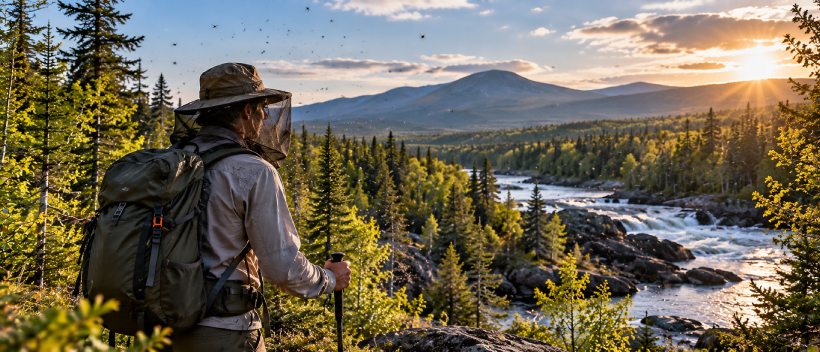
Every spring, Maine hands you a warning. The snow melts, the trails dry out, and then – right when you’re ready to enjoy it – the black flies arrive. For residents, hikers, campers, and anyone visiting between May and June, they’re an unavoidable fact of life. This article covers when black fly season peaks, why certain spots get hit harder than others, and what actually works when you’re trying to stay outside without losing your mind.
When Black Fly Season Starts in Maine
Spring in Maine comes with mud season, peeper frogs, and black flies – roughly in that order. Most years, the first flies appear in late April, peak through May and into mid-June, then taper off as temperatures climb.
What Shapes the Timing
Snowmelt drives the whole cycle. Black fly larvae develop in cold, fast-moving streams, so a heavy snowpack followed by a slow, wet spring can push the season well into late June. A dry, warm spring tends to shorten it.
Where It Hits Hardest
Inland areas and river corridors – think the Kennebec or Allagash – typically see far worse conditions than coastal towns, where sea breezes offer some relief. Northern Maine often gets hit earliest and longest.
Why Maine Black Flies Are So Bad
Maine’s rivers and streams are famously clean. That’s exactly the problem. Black fly larvae need cold, fast-moving, oxygen-rich water to survive, and Maine has it in abundance. Every spring thaw floods boggy edges and logging road ditches, creating ideal breeding conditions. The result is a mass hatch that can feel almost biblical.
A few things separate black flies from mosquitoes. Only females bite, and they don’t just land quietly – they swarm around your head, crawl into ears, and target exposed skin near the hairline. Trails, remote camps, and forest edges near streams get hit hardest. There’s no denying that Maine’s clean water, while a genuine environmental asset, is also the engine behind one of the state’s most notorious seasonal traditions.
How To Survive Black Fly Season Without Staying Inside
Hiding indoors from late April through June isn’t a real strategy – not in Maine. There’s no denying the bugs are bad, but with the right habits, you can stay outside and mostly win.
Dress Like You Mean It
Light-colored, long-sleeved shirts and a head net in heavily wooded areas make a genuine difference. Black flies target dark clothing and exposed skin around the hairline and ears first.
Choose Your Timing
Plan yard work or trail hikes for breezy afternoons. Black flies peak near slow-moving streams at dawn and dusk, so midday with a light wind is your best window.
After the Bite
Wash the area with soap and water, resist scratching, and apply hydrocortisone cream. Watch for unusual swelling or spreading redness – those warrant a call to your doctor.
You Can Outsmart Maine’s Worst Spring Swarms
Spring in Maine comes with black flies the way it comes with mud season – predictably, annually, and without apology. Knowing when they peak (late May through mid-June), where they breed (fast-moving cold streams), and how conditions shift across the state gives you a real edge. Coastal areas clear faster; inland and northern regions stay buggy longer. Cover exposed skin, time your outdoor hours around midday, and use a quality repellent. The season rarely stretches past six weeks. Plenty of Mainers fish, camp, and work outside straight through it with nothing worse than a few itchy welts. Annoying? Absolutely. A reason to stay inside until July? Not even close.