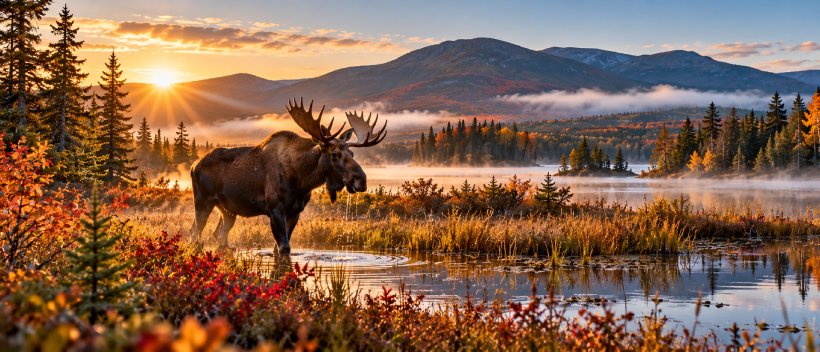
Few things stop a traveler cold like a bull moose stepping out of the tree line at dawn. Maine is home to roughly 60,000 to 70,000 moose, one of the densest populations in the entire Lower 48, and spotting one is genuinely within reach if you know where to look and when to go. Timing and location make all the difference. This guide covers the best regions for sightings, which seasons give you the strongest odds, and a few practical tips to make your trip count.
Best Places to See Moose in Maine
Northern and western Maine hold the highest concentration of moose in the state, with an estimated 60,000–70,000 animals roaming its forests. The regions below offer the strongest sightings, thanks to dense wetlands, low road traffic, and vast stretches of undeveloped habitat.
Greenville and Moosehead Lake
Moosehead Lake sits at the heart of Maine’s moose country. The wetlands and logging roads around Greenville attract moose year-round, especially at dawn.
Baxter State Park
Sandy Stream Pond near Roaring Brook Campground is legendary among moose-watchers. Sightings there are almost routine in summer.
The Forks and Route 201
Route 201 cuts straight through prime habitat. Slow down near any roadside bog between Bingham and The Forks.
Rangeley Lakes Region
Route 16 through Rangeley offers reliable sightings, particularly around marshy pullouts heading toward Stratton.
The Best Time of Year and Day for a Moose Sighting
Choosing the right time of year can improve your chances of spotting moose in Maine. Although sightings are possible from late spring into early autumn, certain months and times of day offer better opportunities to observe these animals in their natural habitat.
The Best Seasons to Visit
Late spring offers promising moose-watching conditions, particularly in May and June, when these animals often visit wetlands to graze on water plants. Another favorable period arrives in September and early October, during the annual mating season, or rut. Bulls become more active and may venture into exposed areas, giving patient wildlife watchers additional opportunities for sightings.
The Best Times of Day
Dawn and dusk are your best bets, full stop. Heat pushes moose into shaded cover during midday, so summer afternoons are usually a washout. Roadside sightings along busy tourist corridors can feel unpredictable in July and August.
How to Improve Your Odds and Stay Safe
Timing and patience do more than any app or guidebook. Drive slowly on back roads at dawn and dusk, scan the edges of ponds and bogs, and keep binoculars handy. Booking a guided tour in the Moosehead Lake or Rangeley region puts you with someone who knows exactly where animals have been feeding that week.
Viewing Tips
Early morning wins. Pull over quietly, cut the engine, and glass the treeline before stepping out. Local outfitters like Northwoods Outfitters in Greenville run dedicated moose-watching trips that dramatically improve sighting chances.
Safety Advice
Never approach a moose. Bulls during September’s rut and cows protecting calves can charge without warning. Stay road-alert at dawn and dusk since collisions are common on Route 15 and similar rural stretches.
A Little Patience Goes a Long Way
Spotting one of Maine’s roughly 75,000 moose is rarely guaranteed, but there’s no denying your odds improve dramatically when you combine the right place, the right season, and the right hour of day. Head to the Moosehead Lake region or the North Maine Woods in late May through September, arrive at dawn or dusk, and give yourself time to simply wait and watch. Whether you catch a bull wading through a bog on a guided tour, or a cow moose stepping out of the tree line along Route 15, the moment tends to stay with you. Respect the distance, keep the engine quiet, and the experience will feel worth every early morning.