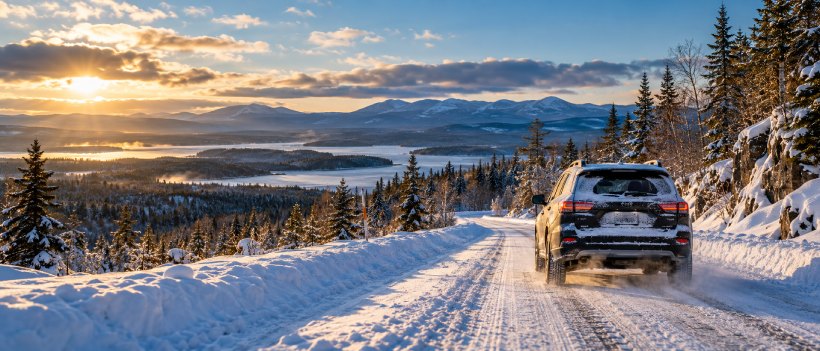
Rural Maine roads don’t forgive much in winter. A stretch that takes 20 minutes in July can become a white-knuckle ordeal in February – especially when plows haven’t come through, your cell signal disappears, and the nearest town is 15 miles back. There’s no denying that distance and isolation raise the stakes for everyday drivers here. This article covers what you need to know: how to prepare your vehicle, what to keep on hand, and how to adjust the way you drive when snow and ice take over.
Prepare Your Vehicle Before the Storm Hits
Rural roads in Maine don’t come with guarantees. A breakdown on Route 6 outside of Jackman means waiting far longer for help than a driver in Portland ever would. That’s why checking your vehicle before winter arrives isn’t optional – it’s just common sense.
Run through these checkpoints before the first hard freeze:
Tires and Brakes
Winter tires outperform all-seasons on ice and packed snow. Check tread depth using a quarter – if Washington’s head disappears, you’re fine. Have brakes inspected at the same time.
Battery, Lights, and Fluids
Cold kills weak batteries fast. Get yours tested if it’s over three years old. Swap wiper blades for winter ones, fill up with washer fluid rated to –32°F, and confirm all lights work.
Fuel
Keep the tank above half. Running low in a remote area is a real emergency.
Pack an Emergency Kit You Can Rely On
On rural Maine roads, the nearest town can be 20 miles out. If you slide into a ditch or get stuck in a whiteout, help may take hours. A well-stocked kit isn’t optional out here.
Warmth Items
Keep a wool blanket, insulated gloves, a hat, and an extra layer in your trunk. Temperatures drop fast once your engine is off.
Visibility and Rescue Gear
Pack a flashlight, a portable phone charger, a small shovel, and road flares or reflectors. These help rescuers spot you and help you signal for help.
Traction and Survival Basics
Kitty litter or sand gives tires grip on ice. Add jumper cables, a first-aid kit, water, and a few energy bars. Assume delays. Plan to stay with your vehicle.
Slow Down and Leave More Space on Rural Roads
Your vehicle’s condition matters, but how you drive it matters more. Once you’re on the road, behavior is your biggest safety factor.
Speed and Following Distance
AAA and highway safety officials consistently recommend dropping your speed well below the posted limit on winter roads. Leave at least double your normal following distance. Gentle braking and gradual steering inputs keep you in control when traction is low.
Rural Hazards to Watch For
Black ice forms first on bridges and shaded stretches – spots that look completely clear. Snowbanks hide intersections. Deer cross without warning. Plow trucks move slowly and throw reduced visibility around them.
When conditions are bad, delaying your trip is the right call.
Prepared Drivers Make Winter Roads Safer
Three actions matter most before any rural winter trip in Maine: get your vehicle ready, pack a real emergency kit, and slow down with extra following distance once you’re out there. A car with worn tires and a weak battery is a liability on Route 9 in January. An emergency kit with blankets, sand, and a charged phone can turn a bad situation into a manageable one. Check the Maine Department of Transportation’s 511 system and the National Weather Service forecast before you leave – conditions on rural roads can shift fast, and knowing what’s ahead gives you a real chance to make a better decision.